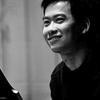
Cynthia Wong
I remember reading a poem about a person who, while dreaming, unlocked certain life truths, only to forget them upon waking. This moment, in which one is suspended in wonderment ...
In honor of its upcoming 40th anniversary, Orpheus Chamber Orchestra will commission new works from four emerging composers, to be premiered during the 2011-2012 Season. Orpheus assembled a panel of artists and industry experts to nominate diverse talent from around the country. Like all things Orpheus, Project 440 relies on open dialogue. Here’s where you come in. We want YOU in the decision-making process. Scroll through the composer profiles and audio below. Let us know who you think Orpheus should commission and why by posting comments on the composer profiles. We will bring your ideas to the table, literally, as Orpheus goes through the selection process.
Check back here early and often, as we post video responses to your comments, news about the candidates, and information about upcoming Project 440 events. Thanks for your participation - now stop reading and start listening!
Project 440 is supported by a leadership gift from an anonymous donor, with additional major support provided by Thomas Bishop.
Project 440 is a collaboration between Orpheus Chamber Orchestra and WQXR 105.9FM.
Congratulations to Clint Needham, Andrew Norman, Alex Mincek, and Cynthia Wong, winners of Orpheus Project 440. Their works will be premiered at Carnegie Hall by Orpheus in the 2011-12 season. Check back here to learn more about their works-in-progress.
We began in June with 60 of today’s most talented emerging composers. Now, after hearing from WQXR listeners and considering YOUR feedback, the Selection Committee has narrowed it down to four composers whose works will be premiered by Orpheus Chamber Orchestra during the 2011-12 Carnegie Hall season.
Tonight at 6 p.m. Q2 presents the remaining twelve finalists of Project 440, Orpheus Chamber Orchestra's initiative in which young composers compete to get one of four commissions from the orchestra.
Hear from Graham Parker, Vice President of WQXR/Former Executive Director of Orpheus, and Melinda Wagner and Fred Lerdahl, two composers who have composed for Orpheus in the past.
Today, Q2 offers 24 straight hours of music composed by the 30 remaining Project 440 artists. With the field about to be narrowed for a second time, it's an opportunity to hear pieces -- including broadcast premieres -- from composers shaping the canon of tomorrow.
Get the latest insights on Project 440—and responses to your comments—in this series of short, informal videos, featuring Orpheus musicians and members of the Nominating Panel.
To all of you who have contributed your comments and questions about Project 440 thus far, thanks! It’s great to see so many thoughtful and wide-ranging opinions. In response to one question—whether Project 440 is a variation on “American Idol” or reality TV at large—we’d like to offer a note of clarification.
I wrote An Ordinary Evening at the Yellowbarn Young Artists Program during the summer of 2009. My goal for the piece was to create music that was driven by textures and timbres rather than harmonies or even rhythms. I tried to bring this about by simplifying my harmonies and rhythms to an almost embarrassing degree. A device I employed throughout was a short but powerful swell, iterated repeatedly. This was inspired by the so-called sidechaining effect that gives the sensation of centrifugal pumping to French house music (Daft Punk, Justice, Danger, and others), which I had been listening to at the time of writing.
The autumn of 2005 is special in my memory—it arrived suddenly, and faded away at an extremely slow pace. It was amazing for me to listen to the sound of the wind blowing through the leaves, and to watch how those trembling leaves changed their colors over time. In response to those enchanting colors and sounds, that autumn I composed these two orchestral tone poems.
The creative spark for Crane was an ambitious collaborative concept: an urban industrial ballet, to involve a live orchestral performance and the choreographed movement of cranes located at various building sites across the Dublin skyline during the apex of Dublin’s construction boom. Although the costs and practicalities of the choreography eventually proved insurmountable, it happily set the conditions for the birth of this stand-alone piece.
A major work for brass and percussion, Nahstops 2 was written in 2004 for James Watson and the Royal Academy of Music in London. It is a dramatic and varied work composed for a large ensemble—the same size as that used in Elgar Howarth’s version of Pictures at an Exhibition—and while not programmatic, it is written in episodes or chapters. The extract here first splits the two sections of trombones and trumpets, with one group playing a vibrant dancelike theme and the other a broad melody, before combining the forces in a dramatic conclusion.
The musical legacy of French composer Erik Satie (1866-1925) is, in the eyes of many, superseded by the quirks that defined him as a man. Such eccentricities are often evident in the titles given to his works, such as Two Preludes For a Dog and Dried Up Embryos, and his sharp wit can clearly be observed in his countless quips and keen observations on music, art, religion, society, and everything else. To this day people are still vexed by this monumentally inscrutable figure.
Unlike all other stringed instruments, which make sound through some act of plucking, hammering or bowing, the Aeolian harp is activated by wind blowing across the strings, like a telephone wire humming in a stiff breeze. The instrument particularly captivated poets of the Romantic age, including Samuel Taylor Coleridge (1772-1834). In The Aeolian Harp, the poet recalls lounging on a lazy afternoon and musing on the instrument’s “soft floating witchery of sound” coming from the window.
The Night Gatherers, for viola quintet, was commissioned by the family of my friend, a violist, as a celebration of the life of their recently deceased matriarch. This impressive woman was a painter and long-time advocate for women's rights; one of her best paintings, “The Night Gatherers,” combines these passions in a depiction of Mexican women gathering leftover wheat from the fields in the middle of the night.
Espresso was the first work I wrote in New York City. It was written in a tiny studio just big enough for an upright piano, a chair, a desk, and an espresso machine—the bare necessities for a composer (Beethoven drank 17 cups a day). This dark, short, concentrated shot of a piece is concerned with the development of a flitting, whirring motive first played by a pair of clarinets and then expanding in both directions, always in instrumental pairs. A climax is reached, and after a brass interruption, a set of colorful, mercurial variations follow. The work ends with a calm coda of weightless whispers—an aftertaste, faintly recalling flavors just experienced.
Suite for string quartet was commissioned by Musica Reginae, a relatively new classical music society based in Queens, New York. Their newly formed resident quartet was interested in having new works written for them, and I was at the same time eager to write a string quartet, something that I had somehow managed to avoid up until then. It received its premiere in January 2008 in Flushing Town Hall.l.
The title Interiors is meant to signify a psychological or emotional interior, a mixture of impulse and instinct that operates beneath the surface of conscious action. This general idea is the starting point for an exploration of different narrative paths—ones in which actions may be influenced either by interior impulse or exterior catalyst and in which both types of action can intersect.
Scenes Upon Eternity’s Edge is one work in a series of compositions in which I draw my source of inspiration from the biblical books of Daniel and Revelation.
Although it might appear that the two works submitted here occupy different points on the musical spectrum, they are nonetheless unified by their source of inspiration: people’s everyday struggles, be they political, economic, or emotional. The exploration of these struggles has always been an important part of my work and is what has brought me to compose theatrical music with an explicitly political message. These elements—combined in equal part with my experience as a rock musician—have helped form my compositional voice.
Driving Force (2004) for trombone, tenor saxophone and accordion (commissioned by Gaida Festival, Lithuania)
A driving force is the inner device that stimulates any activity. An impulse and a driving force are required for any action. The latter is the most important. How do we find it? Where does it lie?
Stop is the new Go was written for the Avion Saxophone Quartet in the summer of 2007. I was interested in trying to translate some ideas from film and cinema into music. I was thinking of a narrative in which, for some reason, the story kept getting turned off suddenly, and the viewer or listener then had to piece together what was happening from the fragments they did hear or see. The title refers to the idea that even in the absence of typical or traditional development, a kind of momentum can still be felt throughout the work.